
Alireza Nader
- The Islamic Revolutionary Guard Corps is Iran’s most powerful security and military organization, responsible for the protection and survival of the regime.
- The Guards are also currently Iran’s most powerful economic actor, reinforcing their influence over political decisions.
- Supreme Leader Ayatollah Khamenei and the Revolutionary Guards have formed a symbiotic relationship that buttresses the supreme leader’s authority and preserves the status quo.
- U.S. and international sanctions against Iran compelled the Guards to support nuclear negotiations. However, they will strongly resist major political and even economic reforms after a nuclear deal.
Overview
The Islamic Revolutionary Guard Corps (IRGC) was created after the 1979 revolution to enforce Ayatollah Ruhollah Khomeini’s concept of an Islamic state ruled by a velayat-e faqih (guardianship of the jurist). The Guards played a crucial role not only in crushing early opposition to Khomeini’s vision, but also in repelling Saddam Hussein’s invasion of Iran in 1980. Since then, the Guards have functioned as both the primary internal and external security force. The IRGC has now eclipsed the Artesh, or conventional forces. It operates substantial and independent land, sea and air forces. It commands burgeoning missile forces. It runs asymmetric warfare through the elite Qods Force and proxy groups, such as Hezbollah. And it would most likely command a nuclear arsenal, if the regime chooses to develop a nuclear weapons capability.
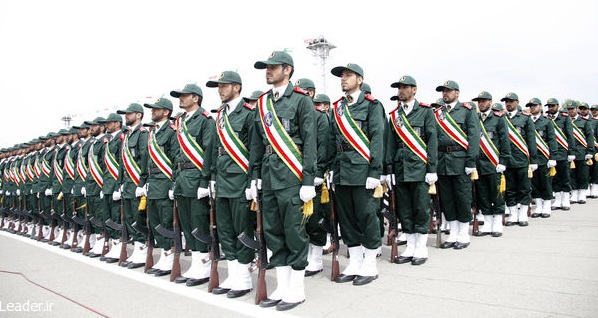 Over time, the Guards have also been transformed into a leading economic and political actor. The IRGC and its associated companies are involved in many sectors of Iran’s economy, allowing it to amass unprecedented power. The Guards’ ascendance could not have happened without the support of Supreme Leader Ayatollah Ali Khamenei and President Mahmoud Ahmadinejad. Khamenei relied on the Guards to buttress his declining authority and to block political reform. As guarantor of the revolution’s core principles, the IRGC played a key role in marginalizing reformist and pragmatic conservative factions seen to challenge those principles.
Military and security role
The IRGC has played an important role in suppressing groups that opposed Khomeini’s objectives, such as the Mujahedin-e Khalq (MEK) Organization. The MEK, a leftist group founded in the 1960s, backed the revolution but then split from the theocrats; it was the largest Iranian opposition group until the 2009 election spawned the Green Movement. The Guards were also responsible for putting down various leftist and ethnic insurgencies that broke out after the revolution.
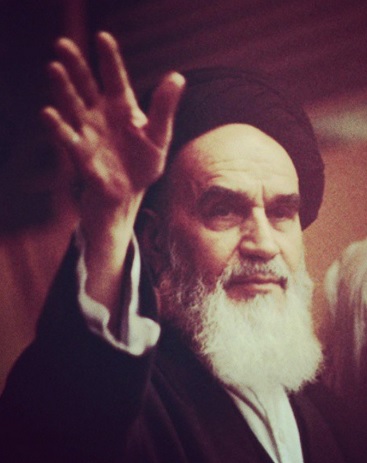 Iraq’s 1980 invasion of Iran actually proved to be a boon for Khomeini and the Guards, as it helped unite the nation around the new regime and bolstered the Guards as Iran’s premier military force. The Artesh was the shah’s main prop; they were also trained and supplied by the Unites States, so were viewed with suspicion by the regime. The Guards, loyal to velayat-e faqih, took the lead in repelling Iraq, although their involvement may have actually prolonged the conflict because of their ideological commitment and lack of military experience. Nevertheless, the Guards’ role in Iran’s so-called “holy defense” against Iraq has been used over the years to burnish their credentials as defender of the revolution and the nation.
The Guards forces now number up to 150,000 men divided into land, sea and air forces. The IRGC land forces are estimated to number between 100,000 and 125,000. The IRGC’s navy may total as many as 20,000, though some estimates are significantly lower. Another 20,000 are in the IRGC naval forces. And the Qods Force totals around 5,000. The Basij militia, which is subordinate to the Guards, can also mobilize hundreds of thousands of its members to defend Iran against a foreign invasion.
The Guards are also in charge of executing Iran’s strategy of asymmetric warfare in the event of a U.S. or Israeli attack. The IRGC’s secretive Qods Force has trained and equipped proxy groups, such as Hezbollah, Hamas, Iraqi Shiite insurgents, and even elements of the Taliban. Some surrogates have already been used to target U.S. and other Western forces in Lebanon, Iraq and Afghanistan; they could be used against U.S. targets outside Iran in the event of a future conflict.
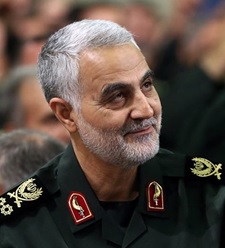 The Guards, especially Qods Force Commander Qassem Soleimani, are in charge of Iran’s policies in Iraq and are leading Iraqi Shia militias in their fight against the Islamic State, also known as ISIS, ISIL, or Daesh. Soleimani, in particular, has assumed a very public role in combatting ISIS. This is perhaps a way for the Iranian government to demonstrate to Iraqi Shiites and the rest of the region that Iran is a powerful force to be reckoned with.
Over the last decade, Iran’s Revolutionary Guards have trained, equipped, and aided Syria’s security and military forces. Iran has played a crucial role in buttressing President Bashar al Assad, through military advice, provision of weapons, and funding of the cash-strapped Syrian government. Some Iranians have been killed in Syria, including Iranian Revolutionary Guard General Mohammed Allahdadi in January 2015. But Iran does not appear to be committing major ground forces to the conflict. Tehran instead prefers to recruit Shiite militias from across the Middle East and even Afghanistan to fight in places like Damascus and Aleppo. Iran’s profile in Syria is lower than its profile in Iraq.
The Guards have also developed an asymmetric naval strategy for use against the U.S. Navy, which has a superior conventional force. The Guards have hundreds of fast attack boats, anti-ship cruise missiles, and naval mines. Together they impede U.S. operations in the Gulf, disrupt shipping, and impose a painful cost on U.S. forces in the event of an armed conflict. The Guards also operate hundreds of ballistic missiles that can target U.S. forces stationed in Gulf Cooperation Council countries, in addition to Israel and beyond.
The Guards are also Iran’s most powerful internal security force, at times cooperating and competing with the ministry of intelligence and other security organizations. The Guards’ intelligence organization appears to have eclipsed the ministry of intelligence in scope and authority, especially after the disputed 2009 presidential election. Other security organizations such as the Basij and the Law Enforcement Forces have become subordinate to the Guards.
Economic giant
The Guards’ involvement in the Iranian economy began during Ayatollah Akbar Hashemi Rafsanjani’s presidency. Reconstruction of Iran’s economy, battered by nearly 10 years of war and revolution, was one of his major priorities. The IRGC had the manpower to engage in reconstruction activities. Rafsanjani may have also hoped to co-opt the Guards by giving them a slice of the economic pie.
Over the next 25 years, however, the Guards became Iran’s largest economic force. The Guards currently dominate most sectors of the economy, from energy to construction, telecommunication to auto making, and even banking and finance. Khatam al Anabia (the Seal of the Prophets), the Guards’ construction headquarters, is involved in much of the Guards’ official economic activities. But the IRGC is also linked to dozens, perhaps even hundreds, of companies that appear to be private in nature but are run by IRGC veterans. So the Guards’ economic influence activities encompass a broad network of current and former members rather than a single official or centrally administered organization.
The IRGC has taken advantage of its national security authority to extend its control. The Guards prevented a Turkish company from building the Imam Khomeini international airport in 2004 on national security grounds. The takeover of the Telecommunications Company of Iran by a Guards-affiliated consortium in 2009 may have also been motivated by security concerns, especially after the presidential election and subsequent unrest.
The Guards have arguably benefitted from international sanctions and Iran’s isolation, which hurt their domestic and foreign business competitors by increasing business costs. The IRGC’s ability to tap into state funds and its relatively vast independent resources have provided a decisive advantage. Under Ahmadinejad, the Guards were awarded hundreds of no-bid government contracts in addition to billions of dollars in loans for construction, infrastructure and energy projects. Some of the Guards may have become rich from the sanctions regime, but overall the Guards, like the rest of the country, have felt the heavy burden of sanctions. This made the Guards support President Rouhani’s nuclear negotiations despite some of their objections and criticisms.
Political role
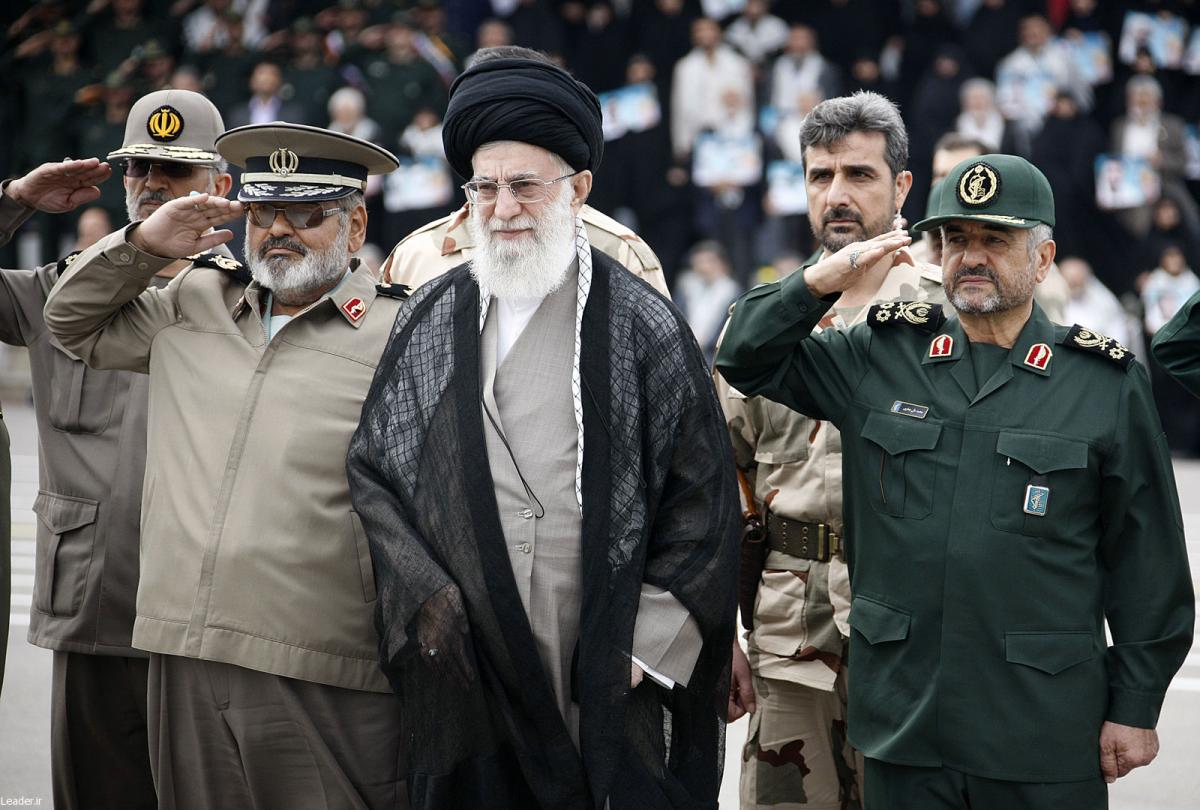 One of the key issues dividing reformist and conservative factions has been the role of the Guards in Iranian politics. Reformists and even some conservatives contend that Khomeini explicitly forbid the Guards’ involvement in politics. The Guards, they argue, were established only to protect the regime. The Guards’ political ascent began during the presidency of Mohammad Khatami between 1997 and 2005. Khatami and his supporters envisioned a series of political, social, and economic reforms to make the Islamic Republic a more “modern” Islamic system. But the reformist agenda threatened the conservative ideology, political power and ideological authority of Supreme Leader Ali Khamenei, who succeeded Khomeini in 1989. Reformist intellectuals questioned Khamenei’s leadership, and even the efficacy of having a supreme leader. Khamenei viewed the Guards as an effective bulwark against the reformist agenda.
The Guards’ rank and file has historically reflected Iranian society and politics at large. Many Guards members supported Khatami in 1995 and Mir Hussein Mousavi in 2009. Nevertheless, the Guards’ top leadership is comprised of conservatives and “principlists” deeply opposed to political reforms. The IRGC leadership’s opposition to Khatami’s reforms was manifested in the “chain murder” of reform intellectuals. The Guards also wrote a letter to Khatami threatening a coup d’etat if he did not rein in the 1999 student demonstrations.
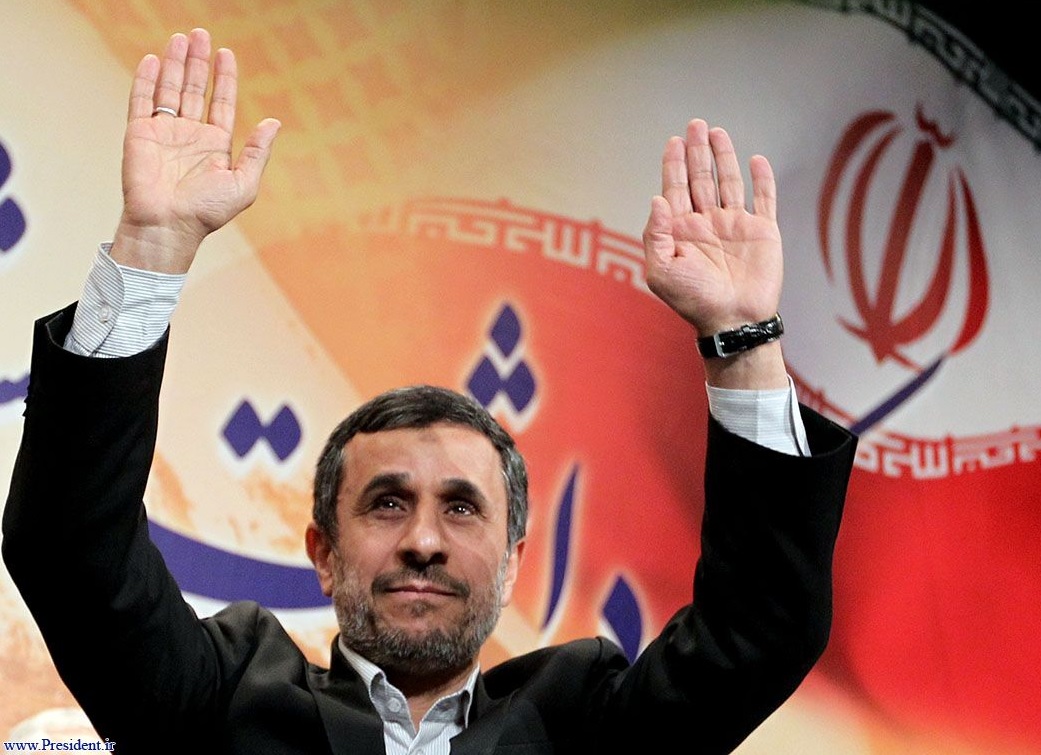 The 2005 election of President Mahmoud Ahmadinejad, a former Revolutionary Guard and a “principlist,” could not have been possible without the active support of Khamenei and the Guards. Allegations of fraud and ballot-stuffing by the Guards and Basij surrounded Ahmadinejad’s victory over Rafsanjani. After the election, Ahmadinejad awarded the IRGC even more government loans and contracts. Guard members also won increasing control of Iran’s internal and national security organizations. IRGC ideologues loyal to Ahmadinejad and the political status quo were also appointed to replace reformists, pragmatic conservatives and technocrats in the bureaucracy.
 The 2009 presidential election confirmed the Guards’ role as Iran’s preeminent power broker, after the supreme leader. Senior Guards officials indicated they would not tolerate a reformist such as former Prime Minister Mir Hossein Mousavi, Ahmadinejad’s leading opponent. Interior Minister Sadegh Mahsouli, a former Guards officer turned businessman who was responsible for supervising the election, played a crucial role in Ahmadinejad’s re-election. And after the disputed poll, the Guards were in charge of crushing the mass protests that flared for six months. The reformist and Green Movement accused the Guards of conducting a coup.
But the Guards are not a united or monolithic force. And not all IRGC members are ideologues. Many respect Mousavi, who was prime minister in the 1980s, for his devotion to the revolution and his conduct during the Iran-Iraq War.
 Rouhani has expressed appreciation for the Guards’ role in protecting the revolution and even their involvement in some economic activities. But overall, he is eager to curtail the Guards’ political and economic power. Rouhani’s agenda of decreasing Iran’s isolation and privatizing the economy cannot be achieved with the Guards as Iran’s primary political and economic actor. The nuclear deal could lead to a big rupture between the Guards and Rouhani.
 Trendlines
- The nuclear deal could pose a threat to the Guards if Rouhani pursues significant political and economic reforms. While the top Guards echelon mostly supports the nuclear agreement, they are against domestic reforms.
- The nuclear deal could empower Rouhani, but the Guards are likely to benefit from an easing of sanctions and a less economically isolated Iran. The deal, however, is not going to allow Rouhani to completely sideline the Guards from their dominant political, economic, and security roles in Iran.
Alireza Nader, a senior international policy analyst at the RAND Corporation, is co-author of "Mullahs, Guards, and Bonyads: An Exploration of Iranian Leadership Dynamics."
This chapter was originally published in 2010, and is updated as of August 2015.
Photo credits: Green movement protestor via The New York Times
