
Emile Hokayem
- Iran’s 1979 revolution transformed relations with Lebanon and politics within Lebanon, especially after Tehran sired Hezbollah in 1982.
- Iran now considers Hezbollah its primary Lebanese interlocutor, followed by the Shiite community, and only then the state.
- Iran has poured billions of dollars and tons of increasingly sophisticated weaponry into Hezbollah, the most successful example of the theocracy’s campaign to export its revolutionary ideals.
- Hezbollah, the Party of God, is an extension of Iran’s foreign policy and an instrument of its security policy, especially against the United States and Israel. Yet it also has its own Lebanese and regional agenda, and is no longer just an obedient proxy of Iran.
- Iran’s use of Lebanon and Hezbollah to challenge Israel, often at great cost, has spawned widespread anger and suspicion among many other Lebanese parties and religious sects. Lebanese views of Iran reflect the country’s political and sectarian fault-lines.
- The Syria conflict has aggravated sectarian tensions and deepened Lebanon's political divide. Iran and Hezbollah have supported President Bashar al Assad in the conflict, while other Lebanese factions have backed Syria’s Sunni rebels.
- Some Lebanese political parties welcomed the final nuclear deal between Iran and the world’s six major powers, but others worried it could bolster Iran’s support to its regional allies – particularly Hezbollah.
Overview
 Iran has long had ties to Lebanon through its Shiite community, the largest of Lebanon’s 18 recognized sects. Many Lebanese clerics came from Iran, trained under Iranians, or had strong Iranian connections. The first leader to mobilize Lebanon’s Shiite community was Musa al-Sadr, an Iranian-born cleric from a prominent family of Lebanese theologians. He trained in Iran’s holy city of Qom. In 1974, he founded the Movement of the Disinherited, to aid Lebanon’s Shiites. It formed an armed wing called Amal during Lebanon’s civil war. Sadr disappeared on a trip to Libya in 1978, but Amal remains one of Lebanon’s two major Shiite parties.
Iranian-Lebanese relations were transformed after Tehran fostered the birth of Hezbollah in 1982. Iran’s operational and financial support shaped Hezbollah into a powerful militia and an important deterrent against Israel. The Lebanese Shiite militia’s symbolic and strategic successes against Israel have in turn made Iran a pivotal player in Levantine politics and broadened Iran’s appeal generally in the Arab world. Over the years, Hezbollah has also provided support for Iran’s external operations. Hezbollah is now a full-fledged partner in a rejectionist front including Iran, Syria and militant Palestinian factions opposed to peace with Israel.
Hezbollah’s political ascendance as the second major Shiite party is due to its advocacy of Shiite rights, its social services and political patronage and its resistance against Israel. Its activism over time translated into cross-confessional appeal and even an alliance with a Christian party. Yet, Hezbollah’s ties to Iran have upset Lebanon’s fragile political balance and heightened sectarian tensions.
Early connections
Iranian-Lebanese relations predate the establishment of modern Lebanon. In the 16th century, the Safavid dynasty recruited Shiite clerics from Jabal Amel, a region of south Lebanon, to help spread Shiism as a state religion. Clerical and family exchanges flourished as a consequence. Later, the growth of Beirut as a major Middle East commercial and cultural center attracted Iranian elites. Two of the last shah’s prime ministers were schooled there.
In the second half of the 20th century, Iranian opponents of the monarchy also found refuge in Lebanon. Some were active in Lebanese politics and even trained in Palestinian camps before and during the Lebanese civil war.
Hezbollah’s birth
Hezbollah’s birth
The 1982 Israeli invasion of Lebanon provided Iran with an opportunity to deepen its engagement among Lebanon’s Shiites and export the ideology of revolutionary leader Ayatollah Ruhollah Khomeini. At war with Iraq and isolated by many Arab governments, Iran was looking for a way to open a new front.
 Iran’s intervention was spearheaded by some 1,500 Revolutionary Guards deployed in Lebanon’s eastern Bekaa Valley. They helped create, arm and fund a shadowy organization that initially went under disparate names and later became Hezbollah, or the Party of God. In 1983 and 1984, its militants bombed two American embassies as well as U.S. and French peacekeeping troops for meddling in Lebanon and siding with Lebanon’s Christian-dominated government. In 1982, following the disappearance of four Iranian diplomats in Lebanon, the precursor to Hezbollah also launched a campaign of kidnappings. Among the nearly 90 western hostages was American University of Beirut President David Dodge, who was abducted in Beirut and held for one year in Iran.
Hezbollah also inflicted severe blows on Israeli occupation forces in Lebanon. Suicide bombers regularly attacked Israeli headquarters and military posts. In 1985, Israel withdrew from most of Lebanese territory it occupied except for a “security zone” in the south. Hezbollah is now unquestionably the foremost Shiite party.
Iran’s influence
It is tempting to infer from arms and financial flows that Iran determines Hezbollah’s behavior. By arming Hezbollah with sophisticated weaponry, Iran has built a powerful force to deter Israel and to hit Israeli targets in the event of another regional conflict. Hezbollah’s arsenal reportedly includes some 40,000 rockets and missiles, including the mid-range Zelzal 1 and Zelzal 2 with a range of 95 miles to 130 miles, and a variant of the Fateh 110 with a range of 155 miles.
In return, the Party of God movement has supplied operatives and logistics when requested, providing Tehran with deniability. Argentine prosecutors have charged Hezbollah and Iran in the 1994 bombing of a Jewish community center in Buenos Aires. The Party of God has allegedly helped Iraqi Shiite militias allied with Iran as well. At least one Hezbollah operative was picked up by U.S. forces in Iraq.
Yet support for Hezbollah does not necessarily translate into allegiance to or unequivocal support for Iran. Lebanese Shiites appreciate Iran’s support in forcing Israel’s withdrawal. But they hold widely diverse views about Iran as a political model; many have concerns about its long-term intentions. Hezbollah’s power also relies on its standing at home and regional image, both of which have suffered from appearing to be a mere proxy of Iran.
As a conventional political party, Hezbollah has to work with dozens of other political parties and organizations. As a welfare agency with tens of thousands of clients, it has to deal with other Lebanese sects. And as a militia, it has to consider the regional balance of power when engaging in resistance. So its relationship with Iran is dynamic rather than uni-directional, with Hezbollah also informing and influencing Iranian policy.
The Lebanese state
The Lebanese state
Iran is obligated under U.N. resolutions to end arms transfers to Hezbollah and to respect Lebanese sovereignty. But given Hezbollah’s political and military power, the weak state of Lebanon has ambiguous relations with Tehran. When the Beirut government is antagonistic toward Hezbollah, as happened between 2005 and 2009, Iran adopts a distance. When the government accommodates Hezbollah, as in 2009 and 2010, Iran warms up.
In mid-2010, Hezbollah’s leader suggested that Iran could arm the Lebanese military. Iran’s defense minister responded that “Lebanon is a friend, and its army is our friend […] We are prepared to help them should there be a request.”
The Syrian factor
Iran-Hezbollah relations have always had to factor in Syria. As the geographic link to Lebanon, Damascus leveraged Iran’s quest for influence in Lebanon to enhance its own power and position. But Syria also often limited Iran’s role for two reasons: First, in order to maintain paramount Syrian control over Lebanon. And second, to preserve its relations with Western and Arab countries.
During its early years, Hezbollah had testy interactions with Damascus, which disliked its revolutionary and fundamentalist agenda. Syria also favored other, more pliable Shiite groups such as Amal. Yet Hezbollah operated in areas under Syrian control. And for isolated Iran, the alliance with Syria remained a priority. So the military and political balance of power tilted in Damascus’ favor. The one target all three could agree on was targeting Israeli forces in Lebanon.
In the early 1990s, Syria began a rapprochement with the United States and participated in international peace talks with Israel. But to preserve leverage over Israel, Syria imposed a Lebanese consensus to allow Hezbollah to remain armed. In exchange, Hezbollah downgraded the Islamist facets of its political program, abandoned revolutionary rhetoric, entered Lebanese political life and abided by Syrian edicts. An inward-looking Iran seeking regional détente facilitated this evolution.
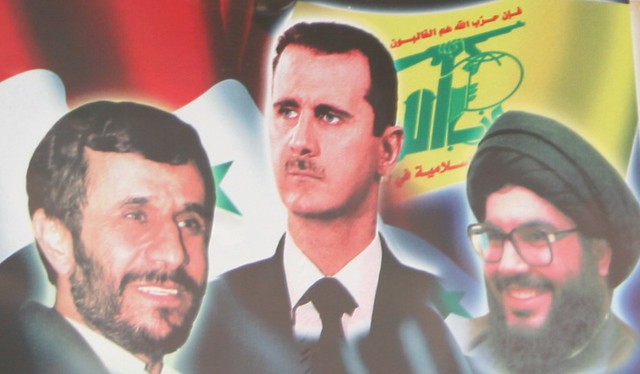 Throughout the 1990s, with Iranian weaponry and Syrian guidance, Hezbollah grew into an increasingly competent guerilla force. Twice, in 1993 and 1996, it resisted Israeli onslaughts, gradually changing the balance of power by elevating the human cost for Israel. Israel finally withdrew from southern Lebanon in 2000, the first time it pulled out of Arab territory unilaterally and without a peace treaty. As Hezbollah’s power reached new heights, however, it also faced growing questions at home and in the region about its weapons and the value of continued resistance. Iran officially remained committed to aiding and abetting the Party of God, but public enthusiasm appeared to wane.
The Syrian conflict that began in 2011 spilled over into Lebanon by mid-2012, with a series of clashes between Alawites and Sunnis in Tripoli, and security incidents across the country. Lebanon was also overwhelmed with mostly Sunni refugees from Syria fleeing Assad's brutality. The conflict also contributed to Lebanon’s political gridlock. The Future Bloc, one of Hezbollah’s rivals, demanded that Hezbollah withdraw from Syria – which Hezbollah adamantly refused.
Hezbollah has operated openly in Syria since 2013, sending thousands of fighters to back President Bashar al Assad. Hezbollah – along with Iran – has bolstered regime forces and helped Assad regain territory lost to rebels. Both Iran and Hezbollah have a stake in the Syria conflict. The Syrian government is a vital conduit between Iran and Hezbollah, according to the International Institute for Strategic Studies. The collapse of the Syrian regime could threaten Iran’s influence in the Levant. And Hezbollah wants to preserve its access to military and financial support from Iran, which would be at risk if Assad falls.
The Iran Nuclear Deal
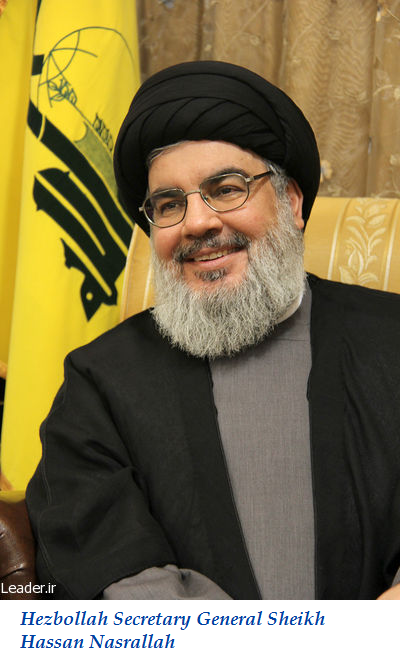 When Iran and the world’s six major powers reached a nuclear deal in July 2015, Lebanese reaction was mixed. The March 8 coalition, dominated by Hezbollah and the Christian Free Patriotic Movement, praised the deal. Hezbollah Secretary General Hassan Nasrallah asserted that the deal would not weaken Tehran’s support for Hezbollah. Nabih Berri, parliament speaker and member of a party aligned with Hezbollah, reportedly contacted Supreme Leader Ayatollah Ali Khamenei to congratulate Iran on the deal. But the agreement also undercut Hezbollah's resistance narrative that the United States was adamantly intent on provoking war in the Middle East.
There were limited hopes that the agreement would help reduce domestic tensions and end Lebanon’s political stalemate. Lebanon has been without a president since May 2014. By mid-2015, parliament had met more than 20 times without electing a head of state, in large part because of Hezbollah and its allies. Hezbollah is thought to be benefiting from the political gridlock as it focuses on shoring up the Assad regime.
Other political factions welcomed the deal more cautiously. Some members of the March 14 coalition, a pro-Western alliance including Sunni and Christian parties, feared that the deal could embolden Iran and Hezbollah. They believed the deal came at the expense of rolling back Iranian influence in the region.
Hezbollah challenges
In 2005, Lebanon’s political landscape underwent rapid and profound changes. Hezbollah was both an instigator and a casualty. The assassination of former Lebanese Prime Minister Rafik Hariri triggered mass protests demanding that Syria end its 29-year military occupation of Lebanon. The Syrian withdrawal in turn allowed for massive public debate over Hezbollah’s armed status. The Party of God also faced new pressure from other Lebanese sects for its ties to Iran. Hezbollah responded by raising its profile as a political champion of the Shiite community. Although it had been in parliament since 1992, it joined the government and took cabinet positions for the first time.
Hezbollah faced a second challenge in July 2006, when again it was both instigator and casualty. It launched a daring raid into Israel to capture Israeli soldiers to exchange for long-held Lebanese prisoners. The gambit backfired, instead igniting a massive Israeli retaliation. Hezbollah demonstrated considerable military prowess, checking Israeli ground forces while showering rockets onto northern Israel without interruption. But the 34-day war also produced billions in damages, mainly in Lebanese civilian areas, and serious loss of Hezbollah military forces.
Despite its losses, the 2006 summer war provided a political boost for Hezbollah at home and in the region. The militia’s self-declared “divine victory” restored some of its image by fighting Israel for over one a month. Iran benefited by association and as Hezbollah’s political patron and arms-supplier. Hezbollah illustrated the viability of the strategy of confrontation preached by the hardline government of President Mahmoud Ahmadinejad. Iran supplied vast sums of money to help Hezbollah allay Shiite suffering after the war. Iranian engineers worked with the Jihad al-Binaa, Hezbollah's construction arm, to rebuild homes and infrastructure. Iran reportedly also helped rebuild Hezbollah's military infrastructure.
By 2015, Hezbollah remained a powerful political and military force. But its intervention in Syria had tarnished its image among Sunnis in the region. Hezbollah also began facing an internal challenge. Its military, financial, and political growth since 2006 created a vast bureaucracy increasingly vulnerable to corruption.
Importantly, five Hezbollah members were indicted in 2011 and tried in abstentia by an international tribunal for Rafik Hariri's assassination. Many surmise that Hezbollah could not have been involved in the assassination without Iran’s knowledge and consent.
Notables in Lebanon-Iran relations
- Hassan Nasrallah is Hezbollah’s secretary general. A charismatic leader who took over the movement in 1992, he is widely admired in the Arab world and more popular than any Iranian leader.
- Musa al-Sadr was the Qom-trained scion of a prominent Lebanese clerical family that moved to Tehran. Al-Sadr, the architect of the awakening of Lebanon’s then-disenfranchised Shiite community, disappeared before the Iranian revolution. His mobilization of the Shiites sect paved the way for greater Iranian political, social and military presence in Lebanon.
- Imad Mughniyah was the former Hezbollah security chief who collaborated with Iranian security. The closeness of Iranian-Hezbollah ties was evident by the large presence of Iranian security personnel at his funeral after he was killed in a car bombing in Damascus in 2008.
- Grand Ayatollah Mohammad Hussein Fadlallah captured the complex nature of Lebanese Shiite-Iranian relations. Fadlallah, long the senior Lebanese Shiite cleric with a following worldwide, was once a spiritual reference for Hezbollah militants. Yet, he openly contested the Iranian concept of velayet-e faqih, the basis of rule by a supreme religious leader. He often clashed theologically and politically with Iran and Hezbollah. He also ran a social services network that catered to the same Shiite constituency. His passing in 2010 left the field open for greater Iranian clerical influence.
Trendlines
- Hezbollah is valuable to Iran, but Iranians have also begun to grumble about the financial and political costs of supporting the Lebanese militia. Hezbollah’s fate now depends more on Lebanese politics and tensions with Israel than on Iran.
- Hezbollah will be a major component in any conflict involving Iran. Yet, its participation may not be automatic. Hezbollah will weigh domestic considerations, including a war’s impact on the Shiite community.
- Peace between Israel, Lebanon and Syria will require Hezbollah’s transformation into a peaceful political party. Yet this will require Iranian acquiescence, which seems unlikely outside some form of U.S.-Iranian rapprochement.
Emile Hokayem is the senior fellow for regional security at the International Institute for Strategic Studies.
Photo credits: Nasrallah via leader.ir; Hezbollah logo via Wikimedia Commons ; Assad, Nasrallah, and Ahmadinejad by Sean Long via Flickr Commons [CC BY-NC-ND 2.0]
This chapter was originally published in 2010, and is updated as of August 2015.

This chapter was originally published in 2010, and is updated as of August 2015.
PDF Iran Region_Hokayem_Lebanon.pdf205.22 KB