
Afshin Molavi
- The Persian Gulf states hold some two-thirds of the world’s proven oil reserves. Saudi Arabia is the largest Gulf oil producer, Iran a distant second.
- Iran’s population of 80.8 million is larger than the seven other Gulf states combined.
- A large population of Iranian nationals lives in the emirate of Dubai, Iran’s most important regional trade partner. Smaller populations live and work in Kuwait, Qatar and Bahrain.
- After World War II, Gulf geopolitics were dominated for five decades by a triangular balance of power among Iran, Saudi Arabia and Iraq. Beginning in the early 1990s, the Iraq corner of the triangle began to weaken, and Iran exploited this weakness by developing broad political, economic, social, and militia networks that deeply influenced the Iraqi state.
- The region has experienced three “Gulf wars”: the Iran-Iraq War of 1980-1988 fought to a brutal stalemate, the successful 1991 U.S.-led coalition to roll back Iraq’s invasion of Kuwait, and the 2003 U.S.-led war to remove Saddam Hussein from power. The 2003 war created an opening for Iran to expand its regional influence.
- By 2015, the traditional post-World War II balance of power no longer existed. It was replaced by robust Saudi-Iranian competition across the Middle East, most notably in Syria and Lebanon, but also in Yemen, Iraq, and Bahrain. The Saudi-Iran conflict is colored by sectarianism and Persian-Arab rivalry, though not driven by it. More traditional geopolitical concerns prevail.
- Persian Iran is the only non-Arab country in the Gulf region. Its predominant religion, Shiite Islam, is shared by a majority of Iraqis and Bahrainis and significant minorities in other Gulf states.
Overview
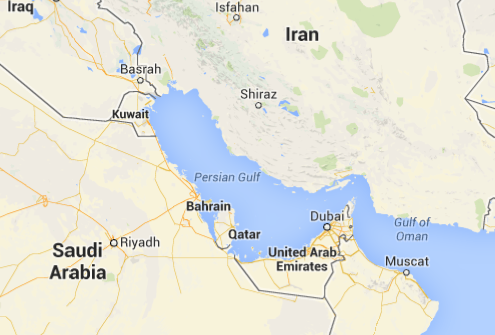 Modern Iranian leaders—from shahs to ayatollahs—have sought a dominant role in the Gulf region because of Iran’s economic and demographic weight, as well as the value of Persian Gulf oil shipping lanes. In the 1960s and 1970s, Iran was the pre-eminent Gulf power and guarantor of U.S. national interests in the region.
 Iran’s 1979 revolution dramatically altered Tehran’s regional stance. Revolutionary leader Ayatollah Ruhollah Khomeini called for the overthrow of existing pro-American monarchs in the Gulf. Iraq’s 1980 invasion of Iran pulled the Gulf Arabs and the United States into the brutal eight-year conflict, mostly on Baghdad’s side.
The end of the Iran-Iraq War in 1988, the death of Ayatollah Khomeini in 1989, and the rise of more pragmatic leadership in Tehran led to an easing of tensions between Iran and the Gulf Arab states. The two subsequent “Gulf wars” in 1991 and 2003 weakened Iraq, thereby strengthening Iran’s relative regional power as it poured resources into shaping post-Saddam Iraq. Iran’s relationship with the smaller states of the lower Persian Gulf has historically been centered on trade. In the United Arab Emirates (UAE), Dubai has emerged as Iran’s most vital Gulf trade partner and an occasional outlet to skirt sanctions.
Despite Dubai’s robust trade with Iran, the UAE capital Abu Dhabi, remains wary of the Islamic Republic and has maintained cool relations with Tehran. Kuwait and Bahrain generally side with Riyadh on Iran matters, though Qatar has reached out tactically – but not strategically – to Tehran.
The sultanate of Oman stands apart from its Gulf Cooperation Council (GCC) neighbors, and has maintained a cordial – even collaborative – relationship with Iran. As a result, Muscat has played a vital intermediary role in opening negotiations between the United States and Iran – much to the chagrin of it GCC partners.
The monarchy 1941-1979
In 1968, Britain declared its intention to abandon all military outposts in the Persian Gulf. Mohammed Reza Shah Pahlavi sought to fill the British vacuum and become the “policeman of the Gulf.” Washington encouraged Tehran by adopting a “twin pillar” policy, anointing both Saudi Arabia and Iran as guarantors of U.S. national security interests in the region. The Nixon administration opened the floodgates to U.S. arms purchases to Iran.
 Although they were all pro-Western regimes, the Persian monarchy had tense exchanges with the Arab sheikhs across the Gulf. In 1968, the shah declared Bahrain a historic Iranian territory, only to pull back after a U. N. mission found that Bahrainis preferred independence. In 1971, Iran seized three strategic Persian Gulf islands—Abu Musa and the Greater and Lesser Tunbs—claimed by the newly formed union of seven emirates, known as the UAE. The shah also refused to participate in the Arab oil embargoes of 1967 and 1973. He continued to sell oil to the West and Israel, a source of contention between Riyadh and Tehran. The shah also had serious ideological differences with socialist and Soviet-allied Iraq. The two countries had a serious dispute over the Shatt al-Arab waterway that required international mediation to resolve in 1975. Yet the shah’s Iran—with its large conventional army, high-tech weapons, large population and strong ties to Washington—seemed like the biggest power on the bloc in the 1970s.
 Decade of conflict 1979-1988
Iran’s 1979 revolution dramatically altered regional geo-politics. Ayatollah Khomeini declared his intent to overthrow Gulf monarchs. Iran was implicated in a coup plot in Bahrain, unrest in Kuwait, and attacks on U.S. facilities in the Gulf states. In 1980, Iraqi President Saddam Hussein, sensing weakness from revolutionary chaos, attacked Iran to prevent the newly formed Islamic Republic from inspiring Iraq’s own Shiite majority and to gain strategic depth on its border.
 The Iran-Iraq War turned out to be a defining feature of Iran-Gulf Arab relations throughout the 1980s. In 1981, the five smaller states of the Gulf—Bahrain, Kuwait, Oman, Qatar, and the UAE—joined with Saudi Arabia in what was billed a security and political alliance, known as the Gulf Cooperation Council (GCC). The Gulf states sided largely with Iraq, although each state—and even emirates within states—charted their own path regarding Iran. Oman was the most notable outlier.
 Saudi Arabia and Kuwait underwrote Saddam’s war efforts to the tune of an estimated $40 billion. The new UAE federation was split. The emirates of Dubai, Sharjah and Umm Al-Quwain remained neutral, fearful of jeopardizing trade and commercial links with Iran. Indeed, Dubai flourished as a re-supply entrepot (trading post) for the Iranian military. But the UAE capital, Abu Dhabi, supported the Saudi-Kuwaiti position.
After 1984, Saudi Arabia and Kuwait were pulled into the war after Iraq struck Iran’s main oil export terminal and Iran retaliated by striking at tankers of Gulf nations allied to Iraq. The United States intervened by re-flagging Kuwait and Saudi tankers, which in turn raised tensions between Tehran and Washington. After a U.S.-flagged ship was hit, the U.S. Navy bombarded an Iranian oil platform in October 1987. U.S.-Iran tensions ultimately led to the accidental shooting down of an Iranian civilian passenger plane by the USS Vincennes, killing 290 passengers and crew, in July 1988.
The war finally ended when Iran accepted U.N. Resolution 598 in August 1988. Ayatollah Khomeini said accepting the terms was akin to drinking “a poisoned chalice.” There was no clear victor, but the triangular balance of power between the Gulf big trio—Iraq, Iran and Saudi Arabia—largely remained intact.
Rafsanjani’s bridge-building 1989-1997
Shortly after he assumed the presidency in 1989, Akbar Hashemi Rafsanjani proclaimed, “Iran needs to stop making enemies.” He signaled a substantive shift in foreign policy from an aggressive revolutionary state to a new pragmatic coexistence. Rafsanjani saw the GCC states not as ripe pawns to be toppled, but as cash-rich investors to entice. Prince Saud al-Faisal, the Saudi foreign minister, suggested shortly thereafter that the two countries could see “a future of positive relations.”
But the third piece of the triangular balance of power, Saddam Hussein’s Iraq, seethed at the sight of his fellow Arab states making conciliatory gestures to Iran. He also seethed at the war debt that he accrued, which he expected Kuwait to forgive since he had fought the dreaded “Persian menace” and “the scourge of Khomeini” on behalf of all Arabs. Unable to come to terms with Kuwait, Saddam Hussein invaded in August 1990.
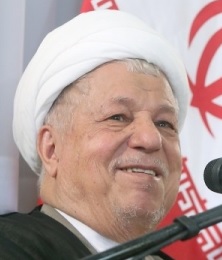 President George H. W. Bush organized an international coalition to liberate Kuwait and protect its Saudi ally. Iran treaded a fine line during the 1991 Gulf War, neither siding with Washington nor hindering its war effort, despite U.S.-Iran tensions. Tehran’s neutrality in the Gulf War did not sway Washington. In 1993, the Clinton administration announced its policy of “dual containment,” targeting both Iraq and Iran. But Rasfanjani’s position did alter GCC perceptions of Iran. Trade increased. Direct flight links were restored. And money began flowing more freely across borders. The Rafsanjani era offered Iran and the region a soft landing from the war’s ravages and the revolution’s zealotry.
 Khatami’s rapprochement 1997-2005
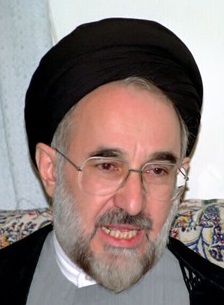
The 1997 election of Mohammad Khatami introduced a period of outreach in his attempt to launch a “dialogue of civilizations.” In December 1997, Tehran hosted the Organization of Islamic Conference (OIC) summit. Among the delegates was Crown Prince Abdullah, the de-facto Saudi head of state, and the most senior Saudi visitor to Iran since the 1979 revolution. The Saudi-Iran détente was accelerating. When President Clinton also initiated an outreach to Iran, several GCC states lined up to play intermediary between Washington and Tehran, although a breakthrough never occurred.
The September 11, 2001 terrorist attack on New York City and Washington D.C. altered the dynamics of U.S.-Iran relations. Within the next two years, President George W. Bush launched two wars on Iran’s borders—in Afghanistan in 2001 and in Iraq in 2003. The U.S. ouster of Saddam Hussein particularly rocked the region—and ended up dramatically changing the balance of power in Iran’s favor.
 For Iran, the U.S.-led war knocked out a primary rival. Tehran also sensed an opportunity to shape and influence post-Saddam Iraq. Over the next two years, Iran’s Islamic Revolutionary Guard Corps (IRGC), and ministry of intelligence began a sophisticated campaign using both hard and soft power. Tehran’s growing role distressed the GCC states. In 2005, Saudi Foreign Minister Prince Saud Al-Faisal expressed some of the frustration, “We fought a war together to keep Iran from occupying Iraq after Iraq was driven out of Kuwait. Now we are handing the whole country over to Iran without reason."
 Rising oil prices also gave Tehran new economic leverage. Flush with new cash, Iranians looked for regional investment opportunities and increasingly turned to Dubai, which emerged as Iran’s offshore business center – its Hong Kong.
By the end of Khatami’s term in 2005, most of the GCC states were again wary of Iran. Iraq was being shaped more by Iran than any other regional state. Sunni Arab states from as far as Egypt and Jordan began to whisper about fears of a Shiite crescent taking hold of the region. The Gulf was in deep flux.
Ahmadinejad’s brinkmanship 2005-2013
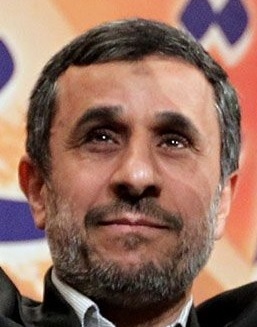 The surprise election of the populist Mahmoud Ahmadinejad in 2005 again changed the dynamics of Iranian foreign policy—this time back to the hardline positions of the early revolution. The regime immediately announced a resumption of uranium enrichment. And Iran’s controversial nuclear program immediately became the focal point of its foreign policy and world diplomacy. Iran’s Gulf neighbors were at least as alarmed as Israel and the United States.
 Saudi Arabia and Iran increasingly found themselves vying for regional influence in proxy battles in Lebanon, the Palestinian territories, Iraq and even Afghanistan. The days of détente seemed a distant memory. In Iraq, Saudi Arabia’s Sunni monarchy tried to protect the Sunni minority while Iran worked with an array of Shiite groups and the two major Kurdish parties to influence the budding Iraqi state. Iraq’s March 2010 elections seemed to indicate that Iran’s efforts had paid off. Immediately after the disputed elections, three of the top four candidates turned up in Tehran for “consultations” with Iranian officials.
A microcosm of the rivalry played out in the UAE. For years, Iran’s top GCC trade partner was oil-less Dubai in the UAE, the Gulf’s rising commercial center which was home to as many Iranians as Emiratis. Tehran’s rival was oil-rich Abu Dhabi, the politically powerful UAE capital allied with the United States. Dubai’s 2008 financial crisis and Abu Dhabi’s subsequent bail-out of its over-leveraged brother tipped the balance in Abu Dhabi’s favor.
Rouhani’s Reintegration Amid Disintegration 2013 - present
Hassan Rouhani overwhelmingly won the June 2013 presidential election with a mandate to improve Iran’s economy, unlock the nuclear dispute with the West, remove sanctions, and reintegrate Iran into the international community and global economy. On July 14, 2015, Rouhani’s negotiating team completed a final nuclear deal with the world’s six major powers.
 Rouhani’s efforts to reintegrate Iran into the world community and exorcise its pariah status came amid a unique moment of regional disintegration and geopolitical disorder, posing significant challenges for the Islamic Republic. The deadly Syrian civil war devolved into a dangerous stew of rising Islamist extremism, sectarian hatred, unprecedented levels of migration, and crimes against humanity perpetrated by a host of actors from President Bashar al Assad’s government to so-called “Islamic State” militants.
 Iran maintained – and amplified – its support for Assad with weapons, advice, and money. It also closely coordinated with Lebanese Hezbollah, who fought on Assad’s behalf. Meanwhile, a Riyadh-Ankara-Doha axis formed to support the Syrian opposition, creating a direct proxy battle with Iran.
In Iraq, the rise of the Sunni extremist “Islamic State” posed a challenge to Iran on two levels: first, the group threatened the rule of Iran’s allied government in Baghdad; second, the group’s venomous ideology exacerbated anti-Shiite views percolating across the Sunni world.
In late March 2015, Saudi Arabia began a robust bombing campaign in Yemen. Its origins – Riyadh says – are in Iranian support for Yemen’s Houthi rebels, who took over large parts of the country in late 2014. While Iran undoubtedly maintains influence over Lebanese Hezbollah and has deep ties in Iraq, its Houthi alliance is more shallow. Still, the GCC and other Sunni states see the war in regional terms as yet another Saudi-Iran proxy battleground.
 To quell rising Gulf concerns about a possible nuclear deal with Iran, President Barack Obama gathered GCC leaders in Camp David in May 2015 to assure them of America’s “ironclad” commitment to their security. The absence of King Salman of Saudi Arabia from the meetings was widely interpreted as a snub.
 Rouhani has made outreach to the Gulf states a priority, but amid regional turmoil, his initiatives have landed off the mark. Rouhani, however, hails from the Rafsanjani camp that believes in pragmatic engagement with Gulf Arab states, not confrontation. But the powerful IRGC is less interested in rapprochement with GCC states. This view is seemingly shared by Iran’s most powerful figure, Supreme Leader Ayatollah Ali Khamenei.
Factoids
- Trade relations between Iran and the UAE have weathered the storm of sanctions, battered but not beaten. The UAE remains a vital trade lifeline for Iran, its second largest trade partner after China. Most of this total trade – valued at some $25 billion – comprises re-exports to Iran from Dubai ports.
- Iran and Oman serve as joint “policemen of the Straits of Hormuz,” the world’s most important oil chokepoint. Some two-fifths of the world’s globally traded oil passes through the Strait, which at its narrowest point is only 21 miles wide.
- Iran’s threats to “close down the Strait” in the event of military conflict ring hollow, as a closure would damage Iran’s own oil industry, the most vital source of state revenues.
- Qatar’s tactical outreach to Iran over the past few years has been strained by the Syrian civil war where the countries are on opposite sides.
- The name of the body of water linking these eight states has occasionally sparked diplomatic spats. For Iranians, it is indisputably the Persian Gulf. For many Arab states, it is either “the Gulf” or, more provocatively, “the Arabian Gulf.” Most official atlases refer to the body of water as the Persian Gulf.
Trendlines
- The world’s major oil players have largely abandoned Iran, but are circling again amid talk of sanctions removal. Still, they will tread with caution in the immediate aftermath of any deal, cognizant that implementation is full of obstacles.
- Iraq has surpassed Iran as the Organization of Petroleum Exporting Countries’ second largest producer. Despite Abu Dhabi’s misgivings about a nuclear deal, UAE-based companies are gearing up for trade and investment opportunities with Iran. If Iran achieves greater integration and if sanctions begin to fall, the most immediate regional beneficiary will be Dubai. The Persian Gulf commercial city-state is best positioned to grow its Iran trade and services network, and its logistics facilities from Dubai International Airport to the Jebel Ali container port will be well-placed to serve the Iranian market.
- Rising anti-Shiite sentiment prevalent across social media in several Gulf states and anti-Iran media messaging will continue to erode what little is left of Iranian soft power. Salafist jihadism will fuel new recruits not only satisfied with targeting Shiites, but also Iranian interests.
- Saudi-Iran rivalry will continue to play out across a disintegrating region.
Afshin Molavi is a senior fellow at the New America Foundation.
Photo credits: Map of the Gulf via Wikimedia Commons [CC BY-SA 3.0]; Mohammad Reza Shah Pahlavi via Wikimedia Commons [public domain]; GCC headquarters via Wikimedia Commons [CC BY-SA 3.0]; Rafsanjani via HashemiRafsanjani.ir; Khatami via Khamenei.ir; Ahmadinejad via President.ir; Rouhani via Twitter;


GCC flag via Wikimedia Commons [public domain]

This chapter was originally published in 2010, and is updated as of August 2015.
PDF Region_Molavi_Gulf.pdf118.05 KB