
Matthew Levitt
- Since 2005, the United States has incrementally imposed financial sanctions on Iranian banks for helping finance Iran's nuclear and ballistic missile programs and terrorist groups. Sanctions are also a response to Iran's deceptive financial practices that threaten to undermine the stability of the international banking system.
- U.S. measures also include informal actions to leverage market forces by highlighting to foreign banks the reputational risk of doing business with an Iranian bank engaged in illicit financial conduct.
- In today’s globalized economy, even unilateral U.S. financial measures against Iranian banks or those doing business with Iranian banks engaged in illicit financial conduct complicate Tehran’s ability to engage in international business, commerce and finance. But multilateral efforts are still preferable for the international legitimacy they confer and their constricting effects.
- Banking sanctions alone did not solve the problem of Iran’s nuclear program. But, coupled with diplomatic and military tools, they disrupted Iran’s illicit activities and deterred third parties from facilitating those activities. Sanctions were also an important factor in bringing Iran to the negotiating table in 2013.
- In July 2015, Iran reached a final agreement on its controversial nuclear program with the world’s six major powers — Britain, China, France, Germany, Russia and the United States. Under the deal, the primary penalty for potential Iranian violations is the re-imposition of suspended sanctions. Preserving the viability of these financial tools is therefore important for the deal itself. Maintaining the viability of the U.S. sanctions architecture is also critical because sanctions proactively targeting Iran's sponsorship of terrorism, human rights abuses, and other illicit conduct are to remain in place.
- Iran remains one of the world's most deficient countries or jurisdictions in terms of money laundering and financing terrorism, which threatens both international and regional security, as well as the international financial system.
Overview
Punitive financial measures represent the strongest non-military tactic available to disrupt Iran’s nuclear program in the short term. They are also the most viable tactic to convince the regime that it cannot afford to carry out destabilizing proliferation activities in the long term. Financial sanctions have proven an effective tool in disrupting the illicit activities of other rogue regimes, like North Korea. But Tehran is even more susceptible to punitive financial measures than Pyongyang because the Islamic Republic is fully integrated in the global financial system. Thus, denying Iran access to it is a powerful tool.
Iran sanctions extend as far back as 1979, although the United States lifted all financial and other sanctions against Iran in 1981. But the United States launched more extensive efforts after the 2005 election of President Mahmoud Ahmadinejad. Shortly after he took office, the regime resumed uranium enrichment efforts, abruptly ending an agreement Tehran made with Britain, France and Germany to suspend its controversial program.
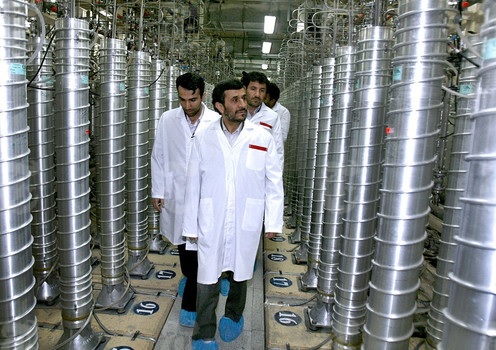 In response, Congress passed a bill in April 2006 extending and strengthening the August 1996 Iran Sanctions Act (ISA). (The Clinton administration had weakened the impact of ISA in 1999 and 2000 in an attempt to engage the previous reformist government.) A modified version of this bill was signed into law on September 30, 2006, three weeks after the U.S. Treasury Department cut off Iran’s Bank Saderat from the U.S. financial system for transferring funds to terrorist organizations. A round of United Nation sanctions followed on December 23, 2006.
In July 2010, the United States imposed the unprecedented sanctions regime known as the Comprehensive Iran Sanctions, Accountability, and Divestment Act (CISADA). CISADA amended the Iran Sanctions Act of 1996 and went further than U.N. Security Council resolutions targeting Iran, specifically Resolution 1929. That resolution, adopted on June 9, 2010, authorized the U.N. Security Council, European Union, and others to go after major actors in Iran’s financial and energy sectors for supporting nuclear or ballistic missile development.
In November 2011, the United States increased pressure on Iran to halt its nuclear program. On November 19, President Obama signed Executive Order 13590, which expanded sanctions on Iran’s energy sector. The United States also sanctioned additional entities and individuals involved in Iran’s nuclear proliferation and missile-related activities. Meanwhile, the Treasury Department identified Iran as a jurisdiction of “primary money laundering concern” under section 311 of the USA PATRIOT Act. For the first time, Treasury called out Iran’s entire financial sector, including its central bank, for engaging in illicit activity and evading international sanctions. That meant strong U.S. pressure on foreign banks not to engage with the sanctioned Iranian banks.
On November 24, 2013, Iran and the world’s six major powers reached an interim nuclear agreement, the Joint Plan of Action (JPOA). It provided six months of temporary relief for Iran by suspending sanctions that targeted only certain industries of Iran’s economy. The JPOA, renewed in July 2014 and again in November 2014, was seen as the first step towards the halting and rollback of Iran’s nuclear program.
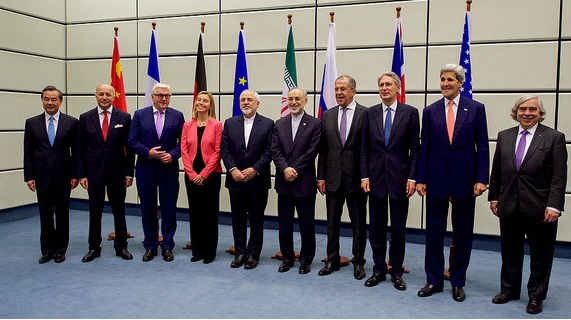
Iran and the so-called P5+1 countries reached a final agreement on July 14, 2015. The Joint Comprehensive Plan of Action (JCPOA) aimed to ensure that Iran’s nuclear program would remain peaceful. As part of the deal, the United Nations, European Union, and United States will cease to apply specified nuclear-related sanctions once the U.N. nuclear watchdog has verified that Iran is appropriately implementing the JCPOA’s terms. Until Implementation Day, which is projected for early to mid-2016, the only effect the JCPOA has on sanctions is extending the limited sanctions relief from the November 2013 JPOA.
“Targeted” sanctions
The financial measures levied against Iran have focused on specific illicit conduct and specific illicit actors—what are known as “targeted sanctions”—not the entire regime. The sanctions started small. They gradually became more severe as Iran continued to engage in three types of activities:
- Refused international inspections of its nuclear facilities
- Engaged in deceptive financial conduct harmful to the international financial system
- Rejected diplomatic overtures and negotiations.
Sanctions imposed since 2006 represent a marked improvement over the broad-based, country-wide sanctions levied against Iraq that President Saddam Hussein easily evaded and abused. Targeted sanctions against Iran have been enacted with three goals in mind: First, they aim to disrupt Iran’s illicit activities. Second, they seek to deter third parties from acting as enablers for Iran’s illicit activities. Third, they aim to force Iran to recalculate the cost-benefit ratio of—and reconsider continuing—its illicit activities. Targeted measures have been directed at specific Iranian companies, sectors and individuals engaged in illicit conduct.
Targeted sanctions against Iran are graduated—they have been implemented in stages, each round building on the previous ones in order to gradually constrict the regime’s air supply, leaving it gasping for breath and desperate to acquiesce. The graduated approach, which includes both multilateral and unilateral efforts, is intended not simply to punish, but to encourage the Iranian regime to alter its behavior.
U-turns
Targeted financial restrictions include blocking “U-turn” transactions. Iranian banks are prohibited from engaging in financial transactions with American banks under sanctions imposed in 1995. But U.S. banks had been allowed to process certain dollar transactions for Iranian entities simply for the purpose of clearing those transactions. This authorization was referred to as a U-turn exception. It applied as long as no U.S. bank directly debited or credited an account of an Iranian party. In 2006, however, the U.S. Treasury Department denied Bank Saderat access to this U-turn, effectively cutting off its ability to do business in dollars, the international currency for oil markets.
 The Treasury Department cited the bank’s ties to terrorism, specifically evidence that Bank Saderat had facilitated Iran’s transfer of millions of dollars to Hezbollah and other extremist groups for several years. The so-called “U-turn license” remained available to all other Iranian banks for the next two years. But in late 2008, after Iran’s illicit activities continued, the Treasury Department ended the U-turn license. This new restriction effectively denied all Iranian banks the ability to use dollars for any transactions related to the international oil economy.
Targets
As of September 2015, the Treasury Department had targeted at least 30 Iranian banks. They include:
Bank Mellat: A state-owned commercial bank meaning “bank of the nation,” Mellat was formed in 1980. It was designated in October 2007 for moving funds for Iran’s nuclear program and providing financial services for the Atomic Energy Organization of Iran and Novin Energy Company. Treasury targeted Mellat’s Malaysian subsidiary, First East Export Bank, in November 2009, as well as the Mellat-linked Mellat Bank SB CJSC (Armenia) and Persian International Bank PLC (United Kingdom) in October 2007.
Bank Melli: Iran’s first national bank, formed in 1927, Melli is now the country’s largest commercial retail bank. Melli provides a wide range of financial services for entities involved in Iran’s nuclear and ballistic missile programs, among its other illicit activities. It was designated in December 2008. Arian Bank (Afghanistan), Bank Kargoshee (Iran), Bank Melli Iran ZAO (Russia), Future Bank (Bahrain) and Melli Bank PLC (United Kingdom) have also been designated for being controlled or owned by Melli.
Bank Sepah: First opened in 1925, the Iranian Army pension fund provided its original capital. The bank was designated in January 2007 for servicing designated Iranian firms involved in proliferation activities. Sepah is Iran’s fifth largest state-owned bank. Treasury targeted its wholly-owned subsidiary, Bank Sepah International PLC (United Kingdom), the same day it targeted Sepah.
Bank Saderat: One of Iran’s largest banks, it was the first to be cut off entirely from the U.S. financial system in September 2006. Treasury targeted the state-owned Saderat for transferring funds from the Central Bank of Iran to Hezbollah and other terrorist organizations. Saderat was founded in 1952.
Further, Treasury designated Banco Internacional de Desarollo, C.A. (Venezeula) and the Export Development Bank of Iran in October 2008, as well as Post Bank in June 2010.
Both Ansar Bank and Mehr Bank were also designated by the Treasury in December 2010 for providing financial services to the Islamic Revolutionary Guard Corps and its volunteer militia, the Basij.
In August 2014, Asia Bank (formerly known as Chemeximbank) was designated for providing support and acting on behalf of Iranian-owned banks that were previously designated, such as the Export Development Bank of Iran, which was designated back in 2008. In 2014, Asia Bank delivered U.S. dollar bank notes from Russia to representatives of the Iranian government worth $13 million. Asia Bank officials organized the entire process from conversion to actual delivery of the bank notes.
Islamic Revolutionary Guard Corps (IRGC): The IRGC has also been a major focus of both U.S. and U.N. sanctions. The Revolutionary Guards are deeply involved in the country’s ballistic missile and nuclear and weapons proliferation activities. They also maintain a special branch, called the Qods Force, which provides funds, weapons and training to terrorist groups.
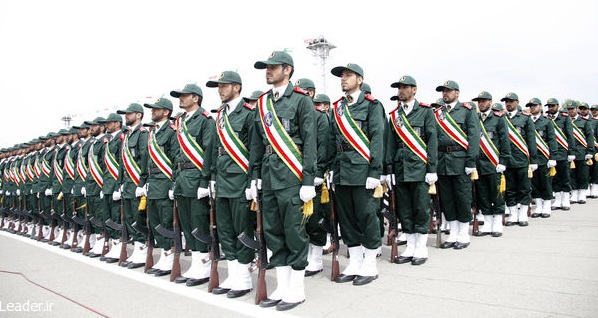 In recent years, the Revolutionary Guards have become one of the largest economic actors in Iran, controlling vast financial assets and resources. Most of the IRGC’s actual funds and assets lie beyond seizure in Iran, but its business and industrial activities—particularly those connected to the oil and gas industries—are heavily dependent on the international financial system. Targeted financial measures against the IRGC represent the kind of regime-hostile, people-friendly initiative that punishes those engaged in offensive behavior, without harming the average Iranian citizen.
Multilateral sanctions
Multilateral sanctions against Iran’s financial institutions are an extremely effective tool in the fight against Iran’s illicit activities. For instance, U.N. resolution 1929, passed on June 9, 2010, designated 40 Iranian entities linked to Tehran’s nuclear and ballistic missile programs, including Bank Mellat’s Malaysian subsidiary, First East Export Bank.
Multilateral bodies such as the Financial Action Task Force (FATF) have also been used to target illicit Iranian financial conduct. Based in Paris, FATF is an international organization created in 1989 to establish standards to combat money laundering and terrorism financing. Its membership includes 34 countries and regional groupings. In a series of warnings between 2007 and 2009, FATF instructed its members to urge their financial institutions to use “enhanced due diligence” when dealing with Iran. In 2009, it went further and urged countries to begin developing “countermeasures” to deal with Iran’s illicit financial activities. FATF also dismissed Iran’s purportedly updated financial legislation, calling the changes “skimpy,” noting their “big deficiencies.”
The risk factor
Sanctions are most effective when they are multilateral. But achieving consensus is difficult and the resulting action often represents the lowest common denominator. As such, complementary measures – including regional efforts by bodies such as the European Union and individual actions such as U.S. designations—are critical in raising the risks of doing business with Iran. Unilateral sanctions are felt internationally because of integrated and globalized market forces.
The reputations of international banks, multinational corporations and insurance companies depend on their due diligence. The risks of engaging with an entity that has been publicly exposed for illicit activity often outweigh the potential profit margins. Executives of foreign corporations have opted to stop dealing with unilaterally sanctioned entities, even if they have no explicit legal obligation to do so.
After President Barack Obama signed a unilateral sanctions bill in mid-2010, Lloyd’s of London denied insurance or re-insurance to petroleum shipments destined for Iran. Lloyd’s’ general counsel acknowledged, “The U.S. is an important market for Lloyd’s....Lloyd's will always comply with applicable sanctions.” Iran’s ability to develop its vast—and extremely lucrative—energy reserves has also been hard hit by investment cutbacks following unilateral U.S. and European actions.
U.S. measures have also led to several high-profile cases against major international financial institutions. In early 2009, Lloyds Banking Group was fined $350 million for processing payments that originated in Iran. In December 2009, Credit Suisse Group paid a $536 million settlement over similar charges. In August 2010, Barclays agreed to pay $298 million to settle charges that it altered financial records to hide payments from sanctioned countries, including Iran.
The actual cost of U.S. fines may not hurt large financial institutions, but firms are wary of the costs to their reputations for being associated with rogue regimes. Foreign financial institutions and private industries increasingly incorporate the Treasury Department’s designation lists into their databases, not because they are required to do so, but out of their own fiduciary interests. Tehran’s ability to do business as usual took a severe hit as banks, multinational corporations and insurers ended their business relationships with Iran.
Informal sanctions
 The Treasury Department also embarked on an ambitious information campaign. Senior Treasury officials met with private sector leaders around the world to outline Iran’s deceptive financial conduct and the risks they pose for banks and businesses. Treasury provided evidence, for example, that Bank Sepah asked other financial institutions to remove its name from transactions when processing them through the international financial system. Informed of the risks, market forces led many banks and corporations to forgo business with Iranian institutions.
In light of growing evidence, the Paris-based Organization for Economic Cooperation and Development, comprised of the world’s 32 strongest economies, raised Iran’s risk rating in early 2006. In addition, a growing number of banks and corporations wanting to conduct business in the United States concluded that putting their U.S. business at risk is not worth the investment in Iran.
Offense and defense
Financial sanctions targeting Iran have also included offensive and defensive measures. Offensive tactics such as designations target actors engaged in illicit activity, from terrorism to weapons proliferation. The U.S. Treasury Department or its counterparts abroad proactively deny these companies or individuals access to the international financial system.
Defensive tools, on the other hand, protect markets by denying entry to banks, companies or individuals who continue to engage in business with risky entities such as Iran, despite knowing the risks. Section 311 of the U.S.A. Patriot Act, for example, gives the Treasury Department the authority to deny risk-prone entities—defined as entities either exposed or involved in money laundering or terror financing—access to the U.S. financial system. Defensive tools do not aggressively target offending companies or individuals but, rather, serve as stop-gap measures to protect the U.S. financial system from abuse. The consequences of being denied access to one of the most important world markets can be severe.
Implications of Sanctions Relief Under the Nuclear Deal
On July 14, 2015, Iran and the world’s six major powers reached a final agreement to limit Iran’s nuclear activities in exchange for sanctions relief. Some sanctions-related portions of the deal are quite strong, though they are not crystal clear in the agreement itself. But others parts of the deal include potentially fatal flaws which, if refined, could lessen the deal’s chances for success.
“Snap Back”
The “snap back” mechanism is one of the deal’s flawed components. Even if the mechanism works as a means of avoiding multilateral debate over whether to re-impose sanctions, and which to re-impose, a quick snap back is highly unlikely. The international community would likely take a while to debate over what constitutes a violation, whether the action in question really qualifies as a violation, and then whether the issue is serious enough to warrant putting the whole deal at risk.
Money for Extremist Groups
 A key concern regarding sanctions relief is that Iran will be able to ramp up support for extremist groups. Iran has not changed its policies regarding the sponsorship of militants since late 2013, when nuclear talks began in earnest. “Iran continued to sponsor terrorist groups around the world, principally through its Islamic Revolutionary Guard Corps-Qods Force (IRGC-QF)...These groups included Lebanese Hizballah, several Iraqi Shia militant groups, Hamas, and Palestine Islamic Jihad,” according to the State Departments June 2015 report on terrorism. In addition, the State Department accused Iran of “prolonging the civil war in Syria, and worsening the human rights and refugee crisis there.” The report described Iran's terror sponsorship as “undiminished.” It also noted that Iran increased training and funding for Iraqi militias in 2014, supplying them with advanced weaponry. Iran also “provided hundreds of millions of dollars” to Hezbollah and “trained thousands of [the group's] fighters at camps in Iran.” The State Department concluded that it did not expect Iran's behavior in Syria to change anytime soon, in part because “Iran views Syria as a crucial causeway in its weapons supply route” to the Shiite political party and militia Hezbollah, a key pillar in Tehran’s “resistance” front. Indeed, Iran continued to provide the Lebanese group with “training, weapons, and explosives, as well as political, diplomatic, monetary, and organizational aid.”
Sanctions relief will take place against this backdrop. Whatever amount of money Iran receives from sanctions relief—Treasury officials put the number around $50 billion as of late 2015 —Iran will gain access to at least tens of billions of dollars, at first from blocked accounts and later from additional oil sales. And while Obama administration officials have acknowledged that Iran engages in a wide range of nefarious activities, Treasury Secretary Jack Lew opined that ”Most of the money Iran receives from sanctions relief will not be used to support those activities.”
Delisting Iranian Entities and Individuals
Many Iranian entities and individuals are slated to be removed from U.N., U.S., or E.U. sanctions lists under the nuclear deal. Some of these may not be delisted right away (in the case of the United States), while others could be delisted very quickly (in the case of the European Union). In some cases, Iranian government entities removed from U.S. lists would still be off limits to U.S. persons (and foreign entities owned by U.S. persons) under the Iranian Transactions and Sanctions Regulations. U.S. officials reportedly scrubbed the weapons of mass destruction (WMD) proliferation lists (notably Executive Order 13382) prior to agreeing to the delisting of any entity and refused to delist those connected to the IRGC.
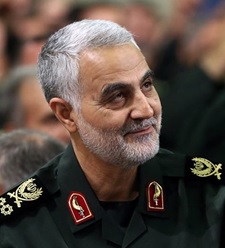 Treasury Department investigations often revealed that Iranian entities were involved in more than one type of illicit activity and therefore qualified for designation under multiple executive orders, such as those for WMD proliferation, human rights abuses, and support for terrorism. In rare cases, an Iranian entity was designated under more than one authority—like IRGC Qods Force commander Qassem Soleimani, designated under WMD proliferation (2007), human rights abuses (2011), and support for terrorism (2011). But in the vast majority of cases, the person or entity was designated only once—under the WMD proliferation authority, which enjoyed significantly more support from European and other allies than designations under terrorism or other authorities. This means that some entities engaged in illicit activities sides WMD proliferation—but are slated for delisting under the nuclear deal despite the effort to keep the ban on IRGC-related entities.
Remaining Risks
In October 2015, FATF issued a statement identifying jurisdictions with "strategic deficiencies" which pose risks to the international financial system. As the technocratic, apolitical, multilateral body charged with setting global standards for anti–money laundering and counter-terror financing, FATF is uniquely positioned to opine on these matters. FATF found that (as in past reports) only two jurisdictions—Iran and North Korea—present such “ongoing and substantial money laundering and terrorist financing (ML/TF) risks” that the international community should apply active “counter-measures” to protect themselves and the larger international financial system.
In private conversations, U.S. officials have said the Obama administration’s interpretation of the deal enables it to take several unilateral actions that will hinder Iran's economic development, including:
- Denying Iran access to the U.S. financial system and the U.S. dollar
- Denying Iran access to the U-Turn transaction mechanism, through which it dollarized international oil transactions in the past (effectively forcing Iran to sell oil in other currencies)
- Aggressively enforcing CISADA's secondary sanctions on foreign entities doing business with entities that remain listed for supporting terrorism or human rights abuses
- Leveraging the snap-back clause to limit business with Iran by underscoring the fact that there is no grandfathering of business ventures that begin work after Implementation Day, under the terms of the deal. In the event of Iranian violations that trigger snap-back sanctions, even those business deals would be impacted. This reality significantly increases the business risk to entering the Iranian market even after Implementation Day.
One potential issue is that these actions are not explicitly laid out in the deal text, leaving some areas open to interpretation by other parties.
Matthew Levitt is the Fromer-Wexler fellow and director of The Washington Institute for Near East Policy's Stein Program on Counterterrorism and Intelligence.
This chapter was originally published in 2010, and is updated as of November 2015.
Photo credits: Natanz via Iranian President's Office and The New York Times; P5+1 foreign ministers via U.S. State Department; Revolutionary Guards via Khamenei.ir; U.S. Dollars by 401kcalculator.org via Flickr (CC BY-SA 2.00); Hezbollah logo by Lurifox (Own work) [CC BY-SA 4.0 (http://creativecommons.org/licenses/by-sa/4.0)], via Wikimedia Commons; Qassem Soleimani via Khamenei.ir;

Sanctions_Levitt_Financial 2015.pdf219.87 KB